
This half-day interactive and experiential course will explore principles of effective negotiation and communication skills in articulating what you most need and in influencing change in policy/practice at all levels.
pEACH is the policy and practice subcommittee of EACH. pEACH can support the work of researchers and educators by encouraging the translation of research into policy and practice and supporting the development of submissions to facilitate policy impact at local and international levels.
Even without realising it, as educators, researchers, and clinicians, so many of us have an opportunity to influence policy/practice or advocate for the consideration of healthcare communication at a range of levels.
This course is designed for educators, researchers, practicing clinicians and health care providers, as well as health professional learners at all levels (students/postgraduate learners) who wish to develop skills to achieve desired outcomes while enhancing relationships with policy makers and key decision-makers. The focus is on influencing policies/practices focused on clinical communication skills. The course combines large group interactive sessions, featuring evidence-informed guidance and concrete steps for developing effective strategies with small group sessions where participants work on their individual real-world issues and develop plans of action.
This course will explore principles of effective communication/negotiation at all levels.
We will discuss and engage in practical activities designed to build skills in negotiation/communication in context such as:
- Negotiating between accrediting bodies and medical schools.
- Working with educators/researchers and their institutions to secure how to support for your success in curriculum a or program development/implementation/delivery, research, funding, or promotion and more.
- Influencing healthcare providers to adopt best practice guidelines; and
- Shaping affect higher levels of policy to influence healthcare institutions and systems, funders and related stakeholders, etc.
Research shows that most patients around the world do not get humanistic, patient-centric, and empathic care resulting in poor outcomes with high disease burden and low satisfaction scores despite the availability of very effective therapies and technologies. Members of EACH have contributed substantially to the literature that demonstrates how the absence of effective communication has contributed to this deficit. pEACH (Policy & Practice Committee of EACH) is committed to supporting the implementation of research findings into effective, evidence-based practice, as well as influencing policymakers to develop and uphold humanistic medical practice policies.
Influencing policy and practice is challenging, requiring motivation and skill to effect change. pEACH is determined to educate our members on effective, efficient, and evidence-based communication skills, and to provide ready to use resources to engage policymakers and other key health stakeholders to build a system that can serve the needs of our patients.
Great communicators are great negotiators; they resolve seemingly intractable disputes and enhance working relationships. Their negotiation/communication skills determine their effectiveness as communicators and influencers of policy. EACH members are often involved in communication and negotiation with an array of stakeholders, including healthcare system bosses / governing boards / C-suites / accrediting bodies / patients / end-users / government / health plans / insurance companies / EMR vendors / pharmaceutical companies and many more.
The ability to negotiate requires a collection of interpersonal and communication skills used together to bring about a desired result. It is based on exploring underlying interests and positions to bring parties together in a constructive way. Effective negotiators use innovative thinking to create lasting value and forge strong professional relationships. They take a deep dive into the motivations and influences behind differing perspectives to better understand and tackle challenges and disagreements.
This half-day highly interactive session, provides evidence/data-based tools/interventions and strategies for identifying individual communication preferences, delivery methods, and approaches to conflict resolution. Participants will have opportunities to discover, learn and practice a range of negotiation skills/tools and techniques. The session will also include case-studies, findings from the literature, needs assessment data, and practical conflict management tools that are useful in negotiation. Evidence-based interventions and tools will be discussed & practiced.
The course will be held in English and as much as possible will accommodate participants for whom English is not their first language. We recognise that institutions in different countries will have varying resources, power structures and policy differences. This course is designed to take this into account, and we will support you in devising strategies tailored to your specific context. The course will be highly interactive and participant centered, enabling individual participants to formulate concrete plans for the future to help them achieve success and enhance their professional satisfaction & wellbeing.
The session will feature dynamic small group discussions and role-play activities. Participants will work collaboratively through posed challenges using group ‘problem-solving’ activities, to ensure that they develop practical strategies that address the needs and expectations of our policymakers, and patients.
Cursus Doelstellingen
Als resultaat van deze cursus kunnen deelnemers:
- Appraise and apply effective communication and negotiation techniques, skills and strategies, while preserving and strengthening relationships with policy makers & key decision makers.
- Understand how different approaches to conflict can influence the negotiation process and its outcomes.
- Describe how personal interests and positions influence negotiation dynamics.
- Identificeer persoonlijke sterke punten en mogelijkheden voor het verbeteren van communicatie- en onderhandelingsvaardigheden.
- Recognize the value of understanding one’s best alternative to a negotiated agreement (BATNA) and its role in successful negotiation.
- Apply principles of negotiation and communication to their own projects or goals
The course facilitators have extensive experience in teaching effective negotiation and communication skills. Their backgrounds include leading Train the Trainers Courses for health professions educators, teaching health professional learners at all levels, and negotiating across a wide range of real-world contexts.
COURSE FACILITATORS
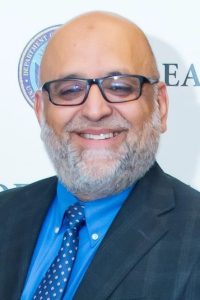 Shakaib (Shak) Rehman, MD, MACP, CSH, FAMIA, FACH, FEACH serves as Chair and Professor of the Department of Biomedical Informatics at the University of Arizona College of Medicine–Phoenix and Chief of Staff for Education at the Phoenix VA Health Care System. He also Serves as the Chief Academic Affiliation Officer at the Department of Veterans Affairs, VISN-22. He currently holds the position of Treasurer of EACH and previously served as Chair of pEACH. Over the course of more than 36 years, as a practicing physician, Dr. Rehman has dedicated his career to advancing the fields of clinical communication and medical education through extensive research, teaching, curriculum development and policy changes. He directs communication skills training for medical students, residents, and practicing clinicians and has led many faculty development programs on communication skills around the world. He has received numerous teaching and mentoring awards from many medical schools and professional societies.
Conor Gilligan, PhD, BBioMedSci is an Associate Professor of Health Behaviour in Medical Program at Bond University, Australia. Conor teaches and researches healthcare communication and is passionate about supporting medical students and doctors to implement patient-centred communication. As co-head of the Bachelor of Medical Studies Program, Conor uses communication and negotiation skills at many levels, to influence curriculum design, accreditation, staff engagement, and decision-making. Conor has been an active member of EACH for many years and is the current chair of pEACH.
Calum MacKichan, PhD is Communication Officer for the Standing Committee of European Doctors (CPME), where he runs the communication for the association representing 1.7 million doctors in 36 countries. CPME contributes the medical profession’s point of view to EU institutions and European policymaking through pro-active cooperation on a wide range of health and healthcare related issues. He holds a PhD in microbiology and has worked in European affairs for over 10 years, with previous roles for scientific and university associations. Calum is current co-chair of pEACH.
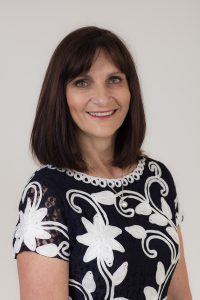 Judy Mullan, PhD, FSHPA, BA, BPharm is a Professor of Pharmacology and Associate Head of School (Research) at the University of Wollongong’s Graduate School of Medicine, and Deputy Director of the Health Innovations Research Entity. A recognised leader in the quality use of medicines, health literacy and health services research, she has led more than 40 major research projects and secured over $22 million in competitive funding. Professor Mullan has published extensively, supervised numerous research students, and contributed to national and international clinical guidelines and standards. With decades of experience as a clinical and consultant pharmacist and an active member of pEACH, she brings substantial expertise in communication, negotiation, and translating evidence into policy and practice.
Course Fees: EACH Member £225 / Non-Member £250
To register for this course click the button below or scan the QR code

 Dutch
Dutch  English
  Arabic
  Danish
  French
  German
  Spanish