
End of life (EoL) conversations remain among the most challenging encounters in healthcare. Clinicians often face uncertainty En emotional tension when discussing death, dying and limited prognosis with patients and families. Navigating these moments requires not only communication skill but also empathy, authenticity and a willingness to explore discomfort.
Despite extensive research demonstrating that effective EOL communication improves satisfaction, reduces distress, and fosters patient centred decision-making, many professionals report limited training and ongoing difficulties managing emotions, expectation and hope. The emotional demands of these conversations may also impact clinician well-being and increase moral distress.
This practical, evidence informed workshop offers participants a safe and reflective learning environment in which to strengthen skills, share experiences, and explore innovative approaches to conversations that challenge both professional expertise and human connection. It aims to increase confidence, competence, and compassion in clinical dialogue at the end of life.
Targeted audience
Practising clinicians from all disciplines who engage in patient care discussions that includes serious illness, prognosis, or end of life decisions. Particularly relevant to physicians, nurses and allied health professionals in acute, primary care or palliative settings who wish to enhance confidence and competence in communication that balances honesty, empathy and hope.
Cursus Doelstellingen
By the end of this workshop, participants will be able to:
- Recognise personal and systemic barriers that make EoL conversations difficult for both patients and clinicians
- Identify and respond effectively to patient and family verbal and non-verbal cues
- Apply evidence-based frameworks to structure dialogue, share information clearly and align decisions with patient values
- Identify resources and strategies to sustain personal resilience and compassion in challenging dialogues
COURSE FACILITATORS
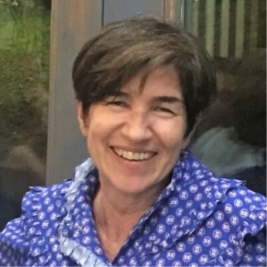 Dr Ana Carvajal-De La Torre is a Family Physician at the CS Casa del Mar Primary Care Health Center in A Coruña, Galicia (Spain). As a member of the Spanish Health & Communication Network (semFYC), Ana has 20 years of experience teaching communication skills to postgraduates (within the Spanish residency training program), as well as other healthcare students and specialists. She is also a member of EACH and ISDM.
Her primary areas of interest include Motivational Interviewing and Shared Decision Making, topics in which she has received extensive training and has served as an instructor for various activities. Ana’s current PhD research focuses on patient-initiated actions in Primary Care. This work aligns with her interest in the “patient’s voice” and exploring how physicians can better facilitate patient
participation.
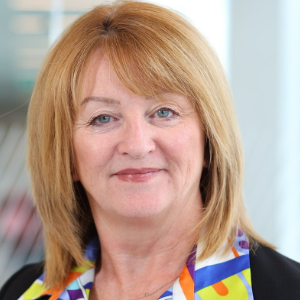 Dr Eva Doherty DClinPsych, CClinPsychol (AFPsSI), CPsychol (AFBPsS), PFHEA, FEACH.
Former Director of Human Factors in Patient Safety | Chartered Clinical Psychologist.
Dr Eva Doherty is a distinguished Chartered Clinical Psychologist and former Associate Professor at RCSI University of Medicine and Health Sciences, Dublin. She has led pioneering work in Human Factors in Patient Safety, directing nationally mandated training, research, and assessment programmes for surgical, emergency medicine, radiology, and ophthalmology trainees.
With over 100 interactive workshops and high-fidelity simulation courses delivered annually, Eva has advanced clinical training in critical areas such as medical error, risk management, communication, teamwork, conflict resolution, decision-making, crisis management, and
leadership.
She is the architect of the Postgraduate Diploma/MSc in Human Factors in Patient Safety, an innovative inter-professional programme attracting more than 60 scholars each year. Her academic contributions include 50+ peer-reviewed publications on clinical communication, emotional intelligence, curriculum development, and personality factors in medical education.
Beyond academia, Eva serves as advisor to the National Healthcare Communication Programme (HSE, Ireland), is a member of the ISQUA Expert Panel, and the Independent National Patient Safety Council at the Department of Health. She was a member of the team which developed the National Clinical Guideline on Clinical Handover (HSE, Ireland). Her leadership and impact have been recognised internationally with a Principal Fellowship of the Higher Education Academy (UK) and an Honorary Fellowship of EACH International, the
global association for communication in healthcare. Eva brings significant PhD level expertise in Psychology to the field of Human Factors in Healthcare. She has demonstrated visionary leadership in healthcare education and patient safety with proven expertise in curriculum design, simulation training, and interprofessional learning.
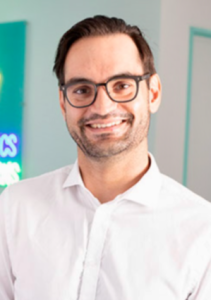 Dr. Nicholas J.W. Mills is a Paediatrician and Palliative Care Physician who works at the Women’s and Children’s Hospital (WCH) in Adelaide, South Australia. Nick has experience in teaching communication skills to multidisciplinary professionals and is a member of the International Association for Communication in Healthcare tEACH subcommittee. He is also trained in Clinical Hypnotherapy and Paediatric Medical Medication and uses these skills in his teaching.
His focus is on developing models of care and approaches to communication that ensure children and families feel heard, listened to and understood. Dr. Mills’ current PhD research aligned with Flinders University focuses on innovative patient-centred approaches for serious illness communication in the Paediatric setting. These strategies are universally applicable to complex communication scenarios across all ages.
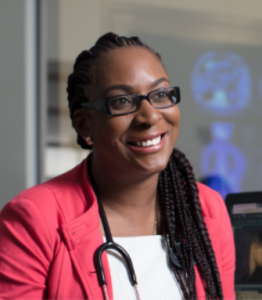 Prof. Gozie Offiah is Associate Professor of Surgery and Director of Curriculum at RCSI, leading transformative initiatives in curriculum design and delivery.
A surgeon with over 15 years’ practice in the Health Service Executive, Ireland, Gozie holds other National and International positions, including Non-Executive Director of MPS, Chair of the MPS Foundation, and Accreditation Commissioner for ACCM. Gozie is the President-Elect of the International Association for Communication in Healthcare (EACH). With over 15 years in medical education, she has spearheaded significant advancements, including the creation of Ireland’s Curriculum Framework for the Internship Programme. Prof. Offiah leverages expertise in curriculum design, accreditation, faculty development, leadership, policy, and practice to advance medical education, patient safety, and lifelong learning through research-informed, institution-wide excellence.
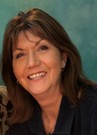 Mandy Williams MSc, BSc, RGN, PGCMHE, Dip Coaching trained as a nurse in in the UK in 1982 and has over 30 years’ experience working in senior nursing positions in specialist palliative care. It was during this clinical experience that she was first introduced to experiential communication skills training and went on to train as a facilitator on the National Advanced Communication Skills Training course for senior clinicians in the UK (formerly called ‘Connected’) which she continues to facilitate today.
Mandy moved into education & training in 2009 and worked for 15 years as a Senior Tutor of clinical communication skills on the undergraduate medical programme at the University of Cambridge Hospitals Trust where she facilitated workshops for for both students and trainers of clinical communication skills. Since 2023 she has been working as an independent coach/trainer in clinical communication
skills with undergraduate and post-graduate health professionals.
Mandy currently provides one to one coaching and communication skills training for doctors experiencing difficulties in the clinical or exam environment and designs & facilitates a wide range of bespoke workshops for health professionals across primary and secondary care organisations. She is a co-developer and facilitator on the “if you were to get worse” Goals of Care Conversations, a 2 day experiential course for clinicians who have conversations with patients & families about serious illness, deteriorating health and advanced planning.
Course Fees: EACH Member £75 / Non-Member £100
To register for this course click the button below or scan the QR code

 Dutch
Dutch  English
  Arabic
  Danish
  French
  German
  Spanish