
This dynamic two-day workshop is designed to empower educators in healthcare with practical skills and strategies for teaching communication effectively. The course emphasizes how to teach—particularly the facilitation of small groups—rather than what to teach or curriculum development. Participants will engage in hands-on activities, reflective exercises, and collaborative learning, guided by expert facilitators.
Previous attendees have consistently rated the course as highly valuable and impactful.
This course is ideal for educators involved in teaching health professionals, including but not limited to:
- Nurses
- Physiotherapists
- Doctors
We welcome participants with varying levels of experience in experiential learning.
Al finalizar el curso, los participantes podrán:
- Apply educational theory to design effective communication skills training
- Identify key components of successful experiential communication sessions
- Integrate role play, video, small group work, and simulated patients to enhance learning
- Deliver structured feedback that supports learner development
- Manage group dynamics effectively in both large and small teaching settings
COURSE OVERVIEW
Applying Learning from the “How to Teach” Course
The skills and insights gained from this course can be immediately and meaningfully applied in several areas of your teaching practice:
Designing Effective Learning Sessions
You’ll learn how to apply educational theory to structure communication skills training that is learner-centred and outcome-driven. This means:
- Creating clear learning objectives
- Aligning teaching methods with desired outcomes
- Using active learning strategies to engage students
Example: Instead of delivering a lecture on empathy, you might design a session where learners explore empathy through role play and reflection, guided by theory such as Kolb’s experiential learning cycle.
Facilitating Small Groups
The course emphasises facilitation over lecturing. You’ll gain confidence in:
- Leading discussions
- Encouraging participation
- Managing differing opinions and energy levels in a teaching session
Example: In a small group of nursing students, you might facilitate a case-based discussion where learners explore communication challenges with patients who are distressed or non-compliant.
Using Experiential Methods
You’ll learn how to incorporate tools like:
- Juego de roles to simulate real-life scenarios
- Video for observation and critique
- Pacientes simulados to practice and refine communication skills
Example: You could run a session where physiotherapy students practice delivering difficult news to a simulated patient, followed by peer and facilitator feedback using evidenced based feedback methodology.
Giving Structured Feedback
You’ll be equipped to provide feedback that is:
- Specific
- Constructive
- Focused on behaviours rather than personal traits
Example: After a role play, instead of saying “That was good,” you might say, “You maintained eye contact and used open-ended questions, which helped the patient feel heard.”
Managing Group Dynamics
You’ll develop strategies to handle:
- Dominant or quiet participants
- Conflict or disengagement
- Time management in group settings
Example: In a mixed group of junior doctors and medical students, you might use structured turn-taking or breakout groups to ensure balanced participation.
COURSE FACILITATORS
Prof. Sandra Winterburn, (Emeritus) RGN, RMN, MSC, PGCE. Sandra worked as the Academic lead for Undergraduate Clinical Communication at Norwich Medical School (NMS) from 2012 to 2024. On leaving her post the University of East Anglia awarded Emeritus status and continues to contribute to the undergraduate curriculum.
Sandra also works as an Independent Trainer / Consultant delivering a range of post graduate training courses such as; Advanced Communication Skills Training, Train the Trainers courses for (EACH), Goals of Care courses which helps clinicians develop the necessary skills to discuss serious illness and ceilings of care.
Sandra has taught clinical communication skills both nationally and internationally and is the co-author of a European inter-professional core communication curriculum for undergraduate training.
Dra. Anne Marie Regan B.A., M.A. (Psych.), D.Clin.Psych. Sc., Dip. C.B.T., C.Clin. Psychol.,PsSI, C.Neuro.Psychol.,Ps.S.I.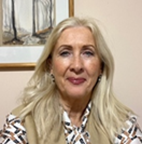
Dr Anne Marie Regan is an Assistant Scheme Director with the ICGP GP trainig programme and teaches on the Western Postgraduate programme for General Practice since 1996. At a national level she is involved in the design and development of tools to aid the National selection process to GP training. She has recently taken a lead role in overseeing the development of a national curriculum for communication skills teaching in postgraduate GP training, and is a practising Clinical Psychologist working for over 35 years in both public; HSE west and private clinical practice.
In addition to her psychology degree from University College Dublin, she has a Certificate in Medical Education from University of Cardiff, a diploma in CBT from University of London and a Doctor of Psychological science from National University of Ireland Galway NUIG exploring the predictive validity of situational judgement tests designed for national selection to GP training. She is a member the tEACH sub group of the International Association of Communication in Healthcare.
She has an integrated role extending to all four years of the postgraduate programme working alongside GP colleagues, and has accrued extensive insights into the challenges facing the practicing physicians. In addition she has taught on the doctorate programme in clinical psychology in NUIG. Her principal areas of interest are communication skills training, selection and professional development with an emphasis on doctors’ self care.
Mandy Williams MSc, BSc, RGN, PGCMHE, Dip Coaching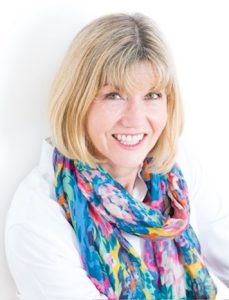
Mandy trained as a nurse in in the UK in 1982 and has over 30 years’ experience working in senior nursing positions in specialist palliative care. It was during this clinical experience that she was first introduced to experiential communication skills training and went on to train as a facilitator on the National Advanced Communication Skills Training course for senior clinicians in the UK (formerly called ‘Connected’) which she continues to facilitate today.
Mandy moved into education & training in 2009 and worked for 15 years as a tutor of clinical communication skills on the undergraduate medical programme at the University of Cambridge Hospitals Trust.
Since 2023 she has been working as an independent coach/trainer in clinical communication skills with undergraduate and post-graduate health professionals.
Mandy currently provides one to one coaching and communication skills training for doctors experiencing difficulties in the clinical or exam environment and designs & facilitates a wide range of bespoke workshops for health professionals across primary and secondary care organisations.
She is a co-developer and facilitator on the “if you were to get worse” Goals of Care Conversations for clinicians working in acute care settings, and has been facilitating workshops for trainers of clinical communication since 2009
Kim Taylor, Simulated Patient
El trabajo de Kim Taylor como paciente simulado en el campo de la capacitación en habilidades de comunicación clínica ha dado lugar a talleres y cursos con médicos y profesionales de la salud en todo el Reino Unido e internacionalmente, desde Noruega hasta EE. UU., desde Europa hasta Sudáfrica.
A nivel universitario, Kim trabaja en sesiones experienciales con estudiantes de medicina en la Universidad de Cambridge y recientemente ha sido consultora en varios proyectos para la Universidad, incluida la capacitación de pacientes simulados y una revisión del proceso de reclutamiento de SP. Con especial interés en el desarrollo de materiales de formación, Kim ha ideado e impartido formación de pacientes simulados en el Reino Unido, Portugal, Austria, Rusia y Sri Lanka.
Course Fees: EACH Member £695 / Non-Member £780
To register click the button below or scan the QR code

 Spanish
  English
  Arabic
  Danish
  Dutch
Dutch  French
  German